Our results have been applied to industrial and business sectors such as Financial Services, Maritime Industry, Defense Industry, Health, Energy and Large-Scale Sports Events.

IDIR has a long and distinguished record of successful research and development in Information and Communication Technologies with notable mentions in Next-Gen Software Engineering, Cybersecurity, Data Science and Smart Factories.
Discover our capabilities
We specialise in requirements engineering and system design for complex, high-risk digital domains, including OSINT, cybersecurity, and data protection platforms. We translate regulatory and security requirements into robust architectures and interoperable information models, embedding privacy- and security-by-design principles.

Requirements Specification & Analysis
Arguably the most sensitive process in the development of any type of system and especially digital systems, that nowadays become the foundations of enterprise transformation, is that of capturing requirements from domain experts such that their business goals are satisfied, their expectations about the qualities of the delivered system are met and the system is delivered on-time and within budget.
Strategic decisions taken at this stage have a profound effect on the technical and economic feasibility of every project. Typical decisions include the likely demand for product or service, the level of desirable service that the business process should strive to achieve, the resources required in order to achieve these levels of service, the trade-off between levels of service and requisite resource, etc. Once these strategic issues at enterprise level and their impact on operations have been analysed attention is turned to developing specifications of requirements for technical systems.
IDIR experts have been involved, for over 30 years in leading edge research and practice in Requirements Engineering. Our state-of-the-art methodology known as e-CORE (standing for early-Capability Oriented Requirements Engineering) employs a set of complimentary and intertwined modelling paradigms based on enterprise capabilities, goals, actors, and information objects. The methodology has a well-defined process and detailed activities supported by software tools that provide both users and developers the basis for a full analysis of the consequences of alternative transformation scenarios.
IDIR has been engaged in a large number of projects, for both large corporations and SMEs, in many sectors including Manufacturing, Finance, Health Care, Energy and Large-Scale Sports Events.
System Dynamics
Enterprise transformation requires adaptability of services in accordance with the dynamism in their ecosystem. The most notable characteristic of agile enterprises is the ability of dynamic decision-making. To achieve this, enterprises need to develop a digital infrastructure, providing the means for quickly getting valuable information to the people who need it. New scalable service delivery platforms, such as cloud computing, Internet of Things, the expanding utilization of data capture and sensing technologies, are some examples that demand now more than ever new ways for dealing with agility, adjustment and alignment, properties that give rise to systemic interconnectivity.
This interconnectivity demands for a methodological approach that is capable to deal with dynamic complexity of systems in order to understand the implications of their interconnected components.
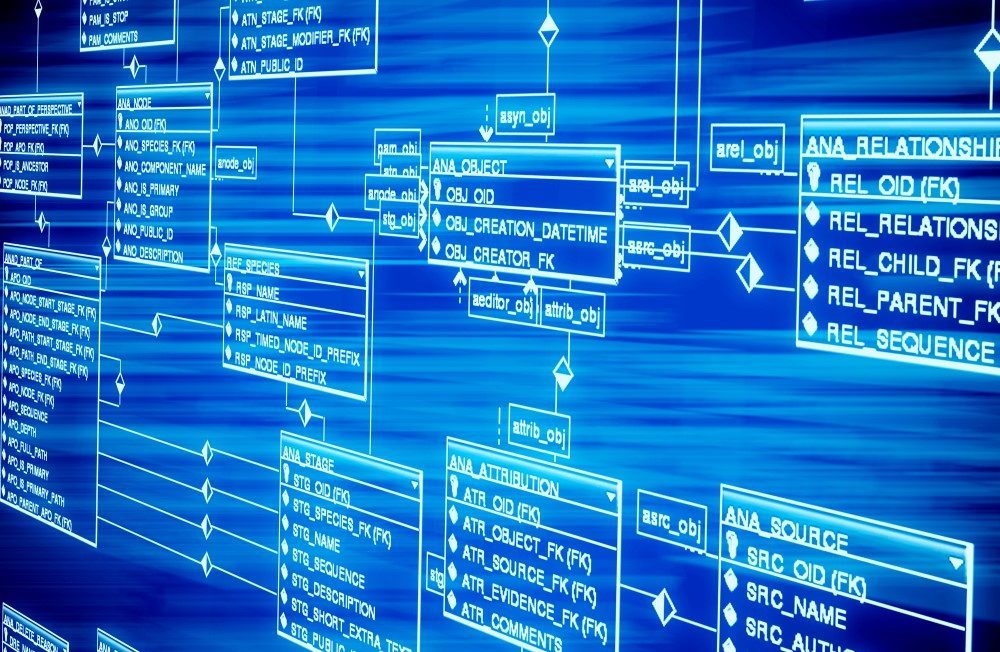
IDIR deploys the well-established approach of System Dynamics that enables one to examine a system’s behaviour to understand how a change in one part of the system can propagate to all other parts and to visualise any unanticipated impact. Using visual languages, underpinned by mathematical theory, we develop models that are subjected to simulation and thus develop scenarios to encourage group brainstorming through which participants could focus on alternative solutions and to envision potential behaviour of the system prior to its implementation.

Technologies for Smart Factories
The factories of the future need to deal with competitive pressures and incorporate new technologies, applications and services. Digital industrial platforms address this need by providing the means to integrate different technologies, take data from the shop floor and the supply network, make it accessible to monitoring and control applications, and allow the development of complementary applications.
Data plays a key role in this transformation, but also poses significant challenges. Manufacturing facilities will need to be digitally connected with external partners in the value chain, so it is important to guarantee an adequate level of security without limiting the capability to exchange data and information both on the manufacturing floor and beyond the factory.
IDIR identifies several challenges in the sector, including privacy, security, dependability, cognitive abilities, user interaction, ubiquity, robust connectivity, governance and, of course, the need to provide quality of service. The smart factory of the future is connected, with connected mobility, smart cities, connected industry, connected enterprise and connected life. Our research in the field focuses on:
- Secure Data Fusion & Integration in Cyber-Physical Systems
- Smart Grids and Next-Gen Electricity Distribution
- Energy-Aware Infrastructure
- Industrial Control Systems and Robotics

Cybersecurity & Data Protection
Although the privacy and personal data protection and the relevant needs for compliance with regulations have been at the forefront of the EU data economy market over several years, there is a perceived lack of easily usable tools to help especially SMEs/MEs, which still face multiple challenges related to data protection and GDPR compliance. Combined with the complexity introduced by data privacy, security, portability and governance requirements, the need for robust SME/ME-specific support measures are obvious and warranted. Although huge amounts are being spent by such enterprises to secure their data and achieve compliance, most of them remain unprotected both from data breaches/cyberthreats and the fines that may result from a lack of compliance.
IDIR is thus currently involved in the development of technological innovations which allow smaller enterprises to tap advanced cybersecurity capabilities, without allocating excessive financial or human resources. These innovations facilitate a digitally-assisted assessment of their current privacy and data protection risks, the drafting and enforcing of a unified GDPR-compliant privacy and data protection policy addressing the identified gaps; and, eventually, collecting, analysing and sharing critical privacy incident or data breach information over open-access platforms to facilitate both reporting to DPAs and responding faster to privacy-related threats.
OSINT Analysis and Secure Exchange
IDIR is experienced in advanced AI-driven Open-Source Intelligence (OSINT) systems that enable organisations to systematically collect, analyse and interpret large volumes of publicly available data to support security, compliance and strategic decision-making, including in law enforcement operations. Our approach integrates automated multilingual data harvesting with state-of-the-art machine learning, natural-language understanding and multimodal analytics, allowing organisations to monitor the open web, social platforms and emerging information ecosystems. Through entity recognition, network reconstruction, sentiment and stance evaluation, and temporal-geospatial enrichment, our tools transform unstructured information into structured intelligence that highlights risks, emerging patterns and early-warning indicators.
Building on extensive research and innovation activities, we develop robust, compliant and evidence-driven analytical environments tailored for organisations operating in complex or regulated domains. Our solutions also support investigations with the interconnection of external databases and integration of domain models, the generation of audit-ready outputs and chain-of-custody evidence documentation, and its secure and trusted exchange.
This capability empowers customers to accelerate intelligence processes, improve operational foresight, and confidently act on insights derived from open-source data within legally sound and ethically aligned frameworks.